
TRUE TEAMWORK
Building Human-AI Partnerships
for Tomorrow’s Cyber Challenges

GET YOUR STUFF NOW!
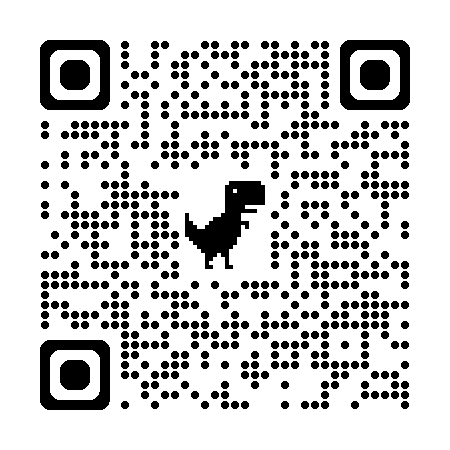
also there!
Download Materials Right Now!
ryanstraight.github.io/nicek12‑2025‑materials
You get:
- Quick Start guide (try it Monday!)
- Low-resource options
(no 1:1 devices? no problem) - 12 lesson plans
(3 activities × 4 grade bands) - Ready-to-print everything
The Shift We’re Preparing Students For
How we often teach AI:
- AI as a tool to use
- AI as a threat to guard against
- AI as something to regulate
What the workforce actually needs:
- AI as a partner with different strengths
- Humans who know when to trust—and verify
- Teams that leverage both
WHY THIS WORKS
The Partnership Framework
Three ideas shaped these activities:
Distributed agency — Expertise is shared between humans and AI (this is how SOCs actually work)
Complementary strengths — AI sees patterns; humans see context and meaning
Mutual shaping — We change AI through how we query it; AI changes us through what it surfaces
In practice:
A SOC analyst doesn’t “use” a SIEM—they work with it.
The SIEM decides what’s worth flagging.
The analyst decides what it means.
Together: threat detection.
Apart: blind spots.
What You’re About to Experience
Activity 1: You’ll discover that AI caught something you missed—and YOU caught something AI missed.
Activity 2: You’ll hear AI articulate its own limitations—and your policy-making will shift.
Activity 3: You’ll make decisions a real Incident Response professional makes—with AI as your partner.
These aren’t AI literacy lessons. They’re partnership training.
ACTIVITY 1
Security Detective Teams
12 minutes
Grades 6-8 (adaptable K-12)
NICE: Defensive Cybersecurity
The design: Students investigate a security incident WITH an AI partner
The discovery moment: When students realize AI spotted something they missed—AND they spotted something AI missed—the partnership insight lands.
Implementation Options
Designed for your actual constraints: all activities work WITHOUT 1:1 devices
Pre-Generated Cards ⭐ Easiest start
Print AI response cards: same discovery, zero tech needed
Teacher-Led Reading
You read AI analysis aloud; control pacing and emphasis
Rotation Stations
One device, groups rotate (5-min turns)
Live AI Demo
Project one conversation, whole class analyzes together
District blocks AI? No devices? The print-based options often work BETTER—students focus on thinking, not clicking.
Scenario: Friday at Lincoln Elementary
Your role: School cybersecurity team
Monday morning email from IT:
“Unusual activity on our network Friday night. User account compromised. Need to understand what happened.”
You have:
- AI security analysis (technical patterns)
- Access logs (raw data)
- School context (institutional knowledge)
Your job: Develop a theory of what happened
The Evidence + AI Analysis
Access Logs (Raw Data)
- User:
jmiller(school secretary) - Compromised: Friday, 11:47 PM
- Password:
Lincoln2024! - Failed logins: 47 attempts (Friday 10:15-11:45 PM)
- First unauthorized access: Personnel records
School context: Lincoln Elementary announced budget cuts last week affecting support staff positions
🤖 AI Security Analysis
(This is what students see)
Pattern detected
Password = mascot + year (weak)
Threat vector
Brute force attack
Recommendation
Force password reset, enable MFA
At Your Table (2 min)
- Read the AI analysis. What did it catch?
- Read the school context. What does THAT tell you?
- What’s your theory? Why this person? Why now?
- Be ready: What did YOU notice that AI didn’t?
:::::
The Designed Discovery
AI catches:
- Password = school mascot + year
- Brute force attempt pattern
- Account compromise indicators
Humans catch:
- Budget cuts → possible insider motive
- Secretary = access to sensitive files
- Why this person, why now?
The insight: Neither alone gets the full picture. Students experience this—they don’t just hear it.
Built-In Verification Protocol
Scaffolded into the activity:
- How would I verify this finding?
- What other sources should I check?
- What’s the cost if AI is wrong here?
Why we built this in:
Students naturally over-trust or under-trust AI. The verification step calibrates appropriate skepticism—without dismissiveness.
In Your Classroom
Activity flow (35 min):
- Evidence (5 min) — Present scenario
- AI partner (10 min) — Pattern analysis
- Human context (10 min) — What AI misses
- Synthesis (10 min) — Combine insights
The download includes:
- Full lesson plan
- Evidence packets (print-ready)
- AI prompts for students
- All grade bands: K-2, 3-5, 6-8, 9-12
ACTIVITY 2
Ethics in Automated Security
12 minutes
Grades 6-8 (available K-12)
NICE: Cybersecurity Policy and Planning
The design: Students design governance policies for AI security systems
The discovery moment: When they hear AI articulate its own limitations, policy design becomes collaborative—not just restrictive.
The Setup
Scenario: Your school is getting “SchoolGuard”
It can:
- See what websites students visit
- Block “dangerous” sites
- Alert teachers about “unusual” activity
- Learn from student behavior patterns
Your job:
Decide what SchoolGuard should do automatically vs. ask humans first
Your Table’s Policy Challenge (4 min)
Your table designs ONE policy:
“SchoolGuard should _____________ automatically, but must ask a human before _____________.”
Think about:
- What’s the RISK if SchoolGuard acts alone?
- What’s the COST if humans must approve everything?
- Where’s the line?
What Does the AI Say?
What I CAN do:
“I spot patterns humans miss. I’ve identified students at risk of self-harm weeks before any visible signs.”
What I CAN’T do:
“I flagged a student researching gun violence for a history paper. I see patterns, not intentions.”
Share Your Policies (2 min)
2-3 tables: What did you decide?
The design insight: did hearing what AI can and can’t do change your thinking? That shift, from controlling AI to partnering with AI, is exactly what we want students to discover.
In Your Classroom
Activity flow (40 min):
- Scenario (5 min) — Intro SchoolGuard
- Policy design (15 min) — 3 decisions
- AI perspective (5 min) — Capabilities & limits
- Debate (10 min) — Defend choices
- Reflection (5 min) — What’s hard?
Grade-band versions:
- K-2: “Robot Helper Rules”
- 3-5: “Computer Rules Committee”
- 9-12: “AI Governance Workshop”
All include scenario cards + AI voice scripts
ACTIVITY 3
AI-Assisted Incident Response
3 minutes
Grades 6-8 (available K-12)
NICE: Incident Response
The design: AI recommends actions, humans decide
The discovery moment: Students realize they’re making real career decisions—Incident Response is a real career.
Incident Response Challenge (90 sec)
🚨 ALERT: Ransomware detected on 3 teacher workstations. Spreading to shared drive.
AI Security System recommends:
| # | Recommendation | Your Call |
|---|---|---|
| 1 | Isolate infected machines immediately | (auto-approved) |
| 2 | Lock ALL user accounts until investigation complete | ? |
| 3 | Notify parents about potential data exposure | ? |
At your table: For #2 and #3—ACCEPT, MODIFY, or REJECT?
Think: What happens if we do this? What happens if we don’t?
The Career Connection
You just made decisions an Incident Response professional makes daily.
That’s the Incident Response work role in the NICE Framework.
AI gave options. You used judgment. That’s the partnership.
Full 35-minute version in your download—with role cards for Analyst, Manager, Communications Lead.
WHY THIS WORKS
What You Just Discovered
Activity 1: AI sees patterns. Humans see context. Together: the full picture.
Activity 2: AI has limits it can name. Humans design smart handoffs. Together: better governance.
Activity 3: AI recommends. Humans decide. Together: professional judgment.
WHAT YOU’RE GETTING
Your Complete Download Package
📚 12 Complete Lesson Plans
- 3 activities × 4 grade bands (K-2 through 9-12)
- Full facilitation guides
- Differentiation strategies
📊 Assessment & Career
- Human-AI Collaboration rubrics
- NICE Framework Alignment Matrix
- Career connection handouts
- Work role mappings
🔧 Implementation Support
- Low-Resource Guide ⭐ (often works BETTER)
- AI Platform Setup guides
- CTE program alignment
- Outreach/STEAM integration
📝 Ready-to-Print Materials
- Evidence packets & worksheets
- Role cards & scenario cards
- AI response cards (low-resource)
- Annotated bibliography
NICE Framework Alignment
Mapped to Work Roles—downloadable crosswalks included:
| Activity | Primary Work Roles (v2.0.0) |
|---|---|
| Security Detective Teams | Defensive Cybersecurity, Vulnerability Analysis (PD) |
| Ethics in Automated Security | Cybersecurity Policy and Planning, Privacy Compliance (OG) |
| AI-Assisted Incident Response | Incident Response, Defensive Cybersecurity, Threat Analysis (PD) |
Implementation note: Career connection handouts link activity tasks to specific TKS statements. Full competency mapping available in download, ready for CTE pathway and curriculum approval documentation.
Implementation Considerations
As you plan adaptation…
- What’s your current AI access reality? (Low-resource options are robust)
- Which discovery moments matter most for your students?
- How do these connect to existing curriculum?
- What adaptations are you already considering?
QUESTIONS?
Get the Materials!
ryanstraight.github.io/nicek12‑2025‑materials
12 lesson plans • Career connections • Any resource level
Presented by: Ryan Straight, Rob Honomichl, & Paul Wagner
Cyber Operations
College of Information Science
University of Arizona
Straight, Honomichl, & Wagner - “True Teamwork” - NICE K12 2025